Guides
How to reset an escape room between games: the field checklist
How to reset escape room clues: a game master's sequence for clues, props, and doors, with a measurable done test and a photo re-run to catch missed locks.
What to take away
- A reset checklist is a clock, not a suggestionminutes saved per group are labor cost saved.
- Reset in one fixed orderexit path, electronics, locks, loose clues, staged props, then the final door and light check.
- A room is ready when every clue is locked, dark, and unlit, and the entry door holds from the outside.
- When a missed clue is found, stop the game and run the photo re-run from the prop zone backward, not just that prop.
What you need before starting
A reset kit should live by the room door or on a cart. Include a master key, spare batteries, a magnet for reed switches, a small flashlight, and a laminated photo board of every prop in its locked state. Keep a printed checklist, not a phone, so a dead battery never stops the turn. If you train a new game master, pair the kit with Getting escape room staff up to speed. The checklist below is the minimum field kit; add items as your props require.
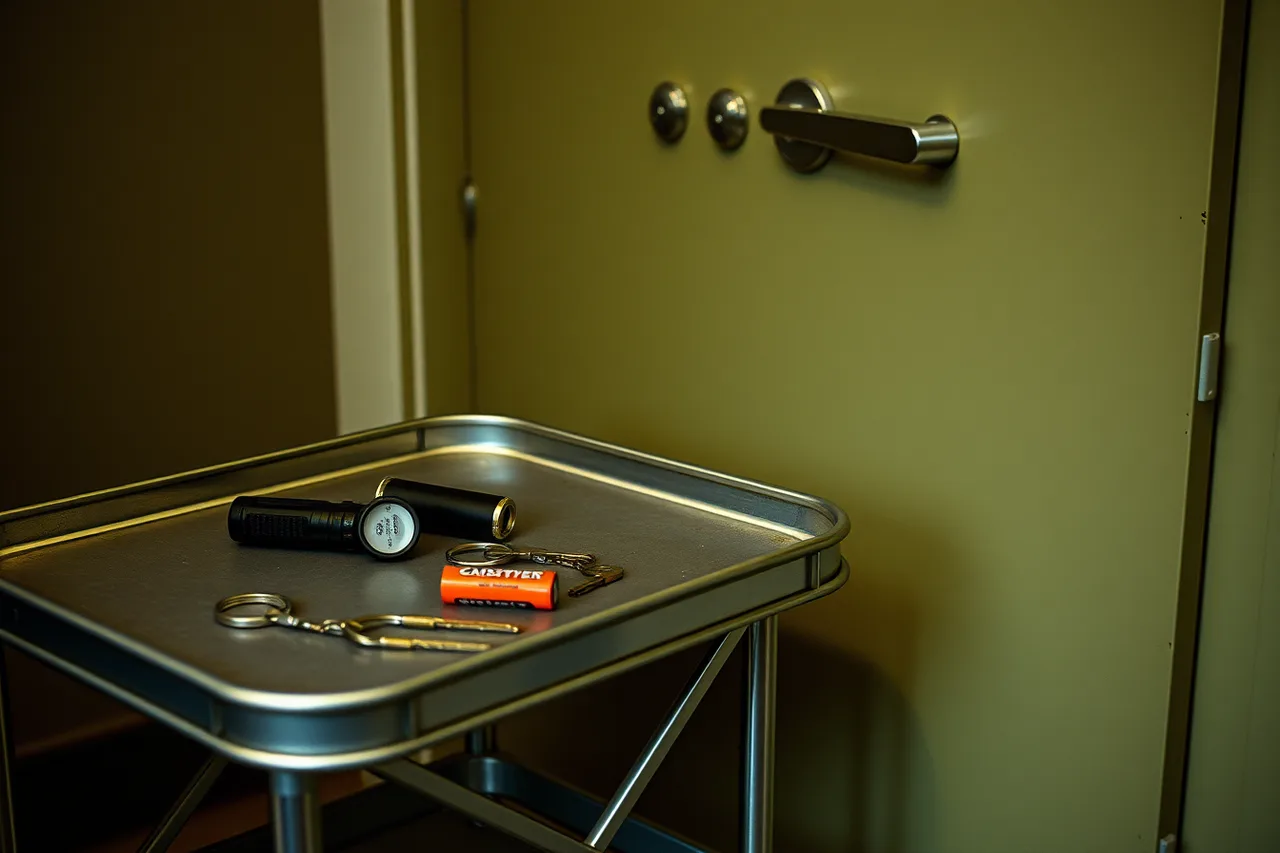
Reset kit minimum field checklist
- Master key and spare keys for every padlock
- Batteries, magnet, flashlight
- Photo board with locked-state photos by zone
- Laminated room map showing reset order
Build your game reset time benchmark from a week of real turnarounds, not from a single ideal run.
The reset sequence
Run these steps in order. The sequence catches failures that hide until the next group.
Reset sequence in order
- Clear players and check exit path
- Turn off powered props, replace low batteries
- Reset magnetic and mechanical locks from photo board
- Re-hide loose clues where photo board shows
- Re-lock padlocks and scramble dials three turns
- Re-stage movable props to marked floor positions
- Scan from player start for solved states
- Close entry door and pull handle once
- Clear the room of all players and personal items, then check the exit path. The route to the door must be free of bags, boxes, and props. OSHA 1910.36 requires exit routes to remain unobstructed.
- Turn off every powered prop. Remove batteries that show a low charge and replace them now. A prop that works on a test magnet but not a player's hand is often a battery problem.
- Reset magnetic and mechanical locks from the photo board. Close each cabinet, drawer, and secret panel. Push the latch until it clicks.
- Re-hide loose clues where the photo board shows them. Do not improvise a new hiding spot because it feels clever.
- Re-lock padlocks and scramble dials at least three full turns away from the solution.
- Re-stage props that move during play, such as chairs, weighted plates, and pressure pads, to their marked floor positions.
- Stand at the player start and scan left to right. Confirm nothing reads as already solved. That scan is the core of how to reset escape room clues: restore the locked state, not just the solved state.
- Close and latch the entry door. From outside, pull the handle once. If it opens without the key, the door sensor or latch failed.
Where judgement replaces the recipe
The photo board answers about 80 percent of a reset, but judgement takes over when a prop is worn. A magnetic catch that needs two tries is not fine. It will fail during the next game and then again during reset. Pull that prop to a maintenance bin and install a spare if you have one. When spares run low, check Sourcing props and set pieces. If a player forced a panel open, do not just re-lock it. Inspect the hinge, the latch, and the surrounding surface for stress cracks before the next group.
How to tell it is right
A reset room has a measurable feel. Walk from the entry to the farthest wall without moving anything. Every powered prop is dark or in standby. Every maglock closes with one click, not a rattle. Run a clean white tissue along the surfaces players touch most. If it comes up gray, the room is not ready for a paying group. The door test is final: close it, lock it, and try the handle once. NFPA 101 requires the inside panic hardware to release with one motion, but the entry latch must hold from the outside until the game starts. If the latch does not hold, stop the reset and do not open the room.
Measurable done test
- Walk entry to farthest wall without moving anything
- Every powered prop dark or in standby
- Every maglock closes with one click, not rattle
- White tissue on touch surfaces comes up clean
- Close, lock, and try handle once
Fixing it when it is not
The common failure is a clue left in its solved position, usually because the game master reset by memory instead of the photo board. If a player finds an open lock, apologize, stop the clock, and run the photo re-run. Open the photo board, place every clue in its locked state, and reset each prop in the same zone, not just the reported prop.
Check the game master log for a note that the prop was already failing. If the same prop fails twice in one day, pull it and mark it out of service. To track repeated reset misses, use the checks in Escape room service quality.