Guides
Sourcing props and set pieces from US suppliers or building in-house
This escape guide compares US prop suppliers and in-house fabrication on lead times, per-piece costs, and the Los Angeles and Atlanta clusters.
What to take away
- This escape guide compares sourcing props and set pieces from US suppliers with building in-house on price, lead time and risk.
- Independent Studio Services, History for Hire and Omega Cinema Props rent film props in Los Angeles. FrightProps and Global Effects sell and fabricate.
- US suppliers quote most set pieces in the low hundreds to low thousands of dollars per piece, with two to eight week lead times.
- Building in-house trades cash for labor, shop space and OSHA duties, including a written PPE assessment and lockout/tagout program.
- The Los Angeles and Atlanta clusters cover different strengths: film flats, foam and resin in California, themed millwork and scenic paint in Georgia. LA shops include Global Effects and Legacy Effects. Atlanta suppliers include Reynolds Advanced Materials and PRG.
- Importing props adds permit, duty and inspection steps that rarely beat domestic lead times on small orders.
Domestic prop suppliers versus in-house fabrication
Most first-time owners face the same split. Buy finished pieces from a domestic prop supplier and open sooner, or build in-house and keep the margin. The right answer depends on how many rooms you are filling and whether you already own a shop.
Buy, build or rent each element
Element has electronics, moving parts or warranty?
Buy from domestic supplier
Build flat scenery in your shop
Domestic suppliers sell escape room props as catalog items: magnetic locks, keypad housings, fake books, aged crates, foam stone walls, themed signage. You order, they ship, you install. The work is coordination, not carpentry.
FrightProps in Saint Paul, Minnesota, sells prop controllers and pneumatic kits. Distortions Unlimited in Greeley, Colorado, sells animatronic masks and props. Adafruit in New York sells sensors and microcontrollers for puzzle builds. Each lists prices online.
In-house fabrication means designing the piece, buying material, cutting, finishing and testing it. You control dimensions, theme and replacement parts. You also own the schedule risk, the dust and the safety paperwork.
A hybrid works for many venues. Buy anything with electronics, moving parts or a warranty. Build flat scenery, signage, plinths and soft dressing in your own shop, where mistakes cost plywood instead of a restocking fee.
Before you commit, sketch the room by zone: entry, puzzle stations, reveal, exit. Mark each element as buy, build or rent. That list becomes your budget and your build calendar. It also keeps you from ordering a $900 prop you could cut from a $40 sheet of MDF.
If you are still choosing between new and used stock, the tradeoffs on warranty, wear and resale are covered in our guide to whether to buy new or used equipment.
Lead times and per-piece costs from US suppliers
Lead time is the number that kills opening dates. Catalog props ship in days. Custom set pieces run weeks. Custom themed millwork runs longer, because a shop has to draft, cut, finish and cure before it crates.
Typical US prop cost and lead time
Element
- Painted flat scenery panel
- $80-$250
- Foam or resin stone wall
- $150-$500
- Themed wooden crate or chest
- $60-$300
- Magnetic lock and housing
- $40-$200
- Custom control panel with wiring
- $400-$1,500
- Themed millwork or built-in
- $800-$4,000
- Signage and vinyl graphics
- $50-$400
Cost
- Painted flat scenery panel
- 1-3 weeks
- Foam or resin stone wall
- 2-5 weeks
- Themed wooden crate or chest
- 1-4 weeks
- Magnetic lock and housing
- 3 days-2 weeks
- Custom control panel with wiring
- 3-8 weeks
- Themed millwork or built-in
- 6-12 weeks
- Signage and vinyl graphics
- 1-2 weeks
Lead time
- Painted flat scenery panel
- Build
- Foam or resin stone wall
- Buy
- Themed wooden crate or chest
- Either
- Magnetic lock and housing
- Buy
- Custom control panel with wiring
- Buy
- Themed millwork or built-in
- Buy
- Signage and vinyl graphics
- Buy
Buy or build
- Painted flat scenery panel
- Foam or resin stone wall
- Themed wooden crate or chest
- Magnetic lock and housing
- Custom control panel with wiring
- Themed millwork or built-in
- Signage and vinyl graphics
Ask every supplier for three dates in writing: order confirmation, ship date and delivery date. A quote without a ship date is a wish. Get the same dates for replacement parts, because a broken puzzle on a Saturday night is a lost weekend.
Per-piece costs vary by material more than by theme. Flat painted scenery is cheap. Anything with a mechanism, a sensor or a lock is not. Shipping and crating add a line most new owners forget.
A FrightProps controller typically costs $60 to $300. A Distortions Unlimited animatronic mask typically runs $150 to $500. A Rose Brand muslin backdrop typically sells for $5 to $15 per yard.
The table below shows typical US market ranges for common set elements. Treat them as planning bands, not quotes, and confirm current pricing with each supplier.
Lead times and per-piece costs
| Element | Typical per-piece cost | Typical lead time | Buy or build |
|---|---|---|---|
| Painted flat scenery panel | $80 to $250 | 1 to 3 weeks | Build |
| Foam or resin stone wall section | $150 to $500 | 2 to 5 weeks | Buy |
| Themed wooden crate or chest | $60 to $300 | 1 to 4 weeks | Either |
| Magnetic lock and housing | $40 to $200 | 3 days to 2 weeks | Buy |
| Custom control panel with wiring | $400 to $1,500 | 3 to 8 weeks | Buy |
| Themed millwork or built-in | $800 to $4,000 | 6 to 12 weeks | Buy |
| Signage and vinyl graphics | $50 to $400 | 1 to 2 weeks | Buy |
| Soft dressing and fabric | $30 to $200 | 3 days to 2 weeks | Either |
| FrightProps prop controller | $60 to $300 | 3 days to 2 weeks | Buy |
| Distortions Unlimited animatronic mask | $150 to $500 | 2 to 4 weeks | Buy |
| Adafruit sensor or microcontroller | $5 to $50 | 2 to 5 days | Buy |
| Rose Brand muslin backdrop | $5 to $15 per yard | 1 to 2 weeks | Buy |
| Reynolds Advanced Materials silicone kit | $30 to $200 | 3 days to 1 week | Buy |
| Global Effects custom prop | $1,000 to $10,000 | 6 to 16 weeks | Buy |
| Legacy Effects animatronic or creature prop | $5,000 to $50,000 | 8 to 24 weeks | Buy |
| Creative Works escape room fabrication | $5,000 to $50,000 | 6 to 16 weeks | Buy |
Custom work is where quotes swing hardest. Two shops can quote the same themed wall 3x apart, because one is estimating labor and the other is estimating material plus a guess.
Budget a contingency of 10 to 15 percent on any custom order. Rush fees, re-crating and freight surcharges are common, and a missed install date costs more than the fee.
If you are assembling a full room list for the first time, our equipment checklist for new owners walks through the categories most venues buy before opening.
The Los Angeles and Atlanta supplier clusters
Two US regions dominate escape room prop and set piece supply: greater Los Angeles and metro Atlanta. They grew from film, television and theme park work, and both still serve those industries first.
Los Angeles vs Atlanta supplier clusters
Los Angeles
- Core areas
- Burbank, Sun Valley, Pacoima
- Roots
- Film and TV scenic shops
- Strengths
- Foam carving, resin, faux finishes
- Watch out
- Higher labor, pilot season crunch
- Rentals
- Hero prop rental inventory
Atlanta
- Core areas
- Marietta, Austell, Lawrenceville
- Roots
- Film and theme park fabrication
- Strengths
- Millwork, signage, metal frames
- Watch out
- Bigger structural pieces, freight
- Rentals
- Limited rental focus
Los Angeles supplier cluster
The Los Angeles cluster sits around Burbank, Sun Valley, Pacoima and the San Fernando Valley, with more suppliers in Santa Clarita and Orange County. Its roots are film and television scenic shops.
Strengths include foam carving, resin casting, faux finishes, prop weapons, aged paper and hero props. If you want a piece that reads as film-quality on camera, this is where the shops are.
Independent Studio Services (ISS) in Sun Valley rents props and set dressing. History for Hire in North Hollywood rents vintage props and furniture. Omega Cinema Props in Los Angeles rents furniture, props and set dressing. All three require a certificate of insurance.
Global Effects in Pacoima fabricates custom props and costumes. Legacy Effects in San Fernando builds animatronics and creature effects. Both quote by project and need clear drawings, dimensions and photos.
Expect higher labor rates than most of the country and tighter calendars during pilot season. Book custom work early, and expect pickup or freight from the shop rather than delivery.
Los Angeles shops also carry rental inventory. Renting a hero prop for a photo moment can cost a fraction of building it, though rental terms usually exclude damage.
Atlanta supplier cluster
Metro Atlanta, especially around Marietta, Austell, Lawrenceville and the I-85 corridor, has become a major scenic and themed fabrication center. Film and theme park production pulled the shops there.
Strengths include themed millwork, dimensional signage, scenic paint, metal frames and larger built-ins. Atlanta shops often handle bigger structural pieces than Los Angeles prop houses.
Reynolds Advanced Materials has an Atlanta location and sells silicone, resin and foam for in-house casting. PRG (Production Resource Group) has an Atlanta shop for scenic fabrication and automation. Freeman's Atlanta office builds exhibits and environments. GES has an Atlanta office for exhibit fabrication. Creative Works in Indianapolis serves Atlanta clients with escape room fabrication.
Labor and freight run lower than California, and the region sits within a two-day truck run of most of the eastern US. That matters when you are shipping a wall section.
Both clusters serve national clients. You do not have to live nearby. You do have to send clear drawings, dimensions and photos, because a shop cannot guess your door width.
For owners comparing brands on build quality and support rather than geography, our review of escape room equipment brands sorts them by how they hold up in daily use.
In-house fabrication: tools, labor and lockout/tagout duties
In-house fabrication is a small woodshop and a small electronics bench sharing a room. That means OSHA rules apply to you the same way they apply to a cabinet shop.
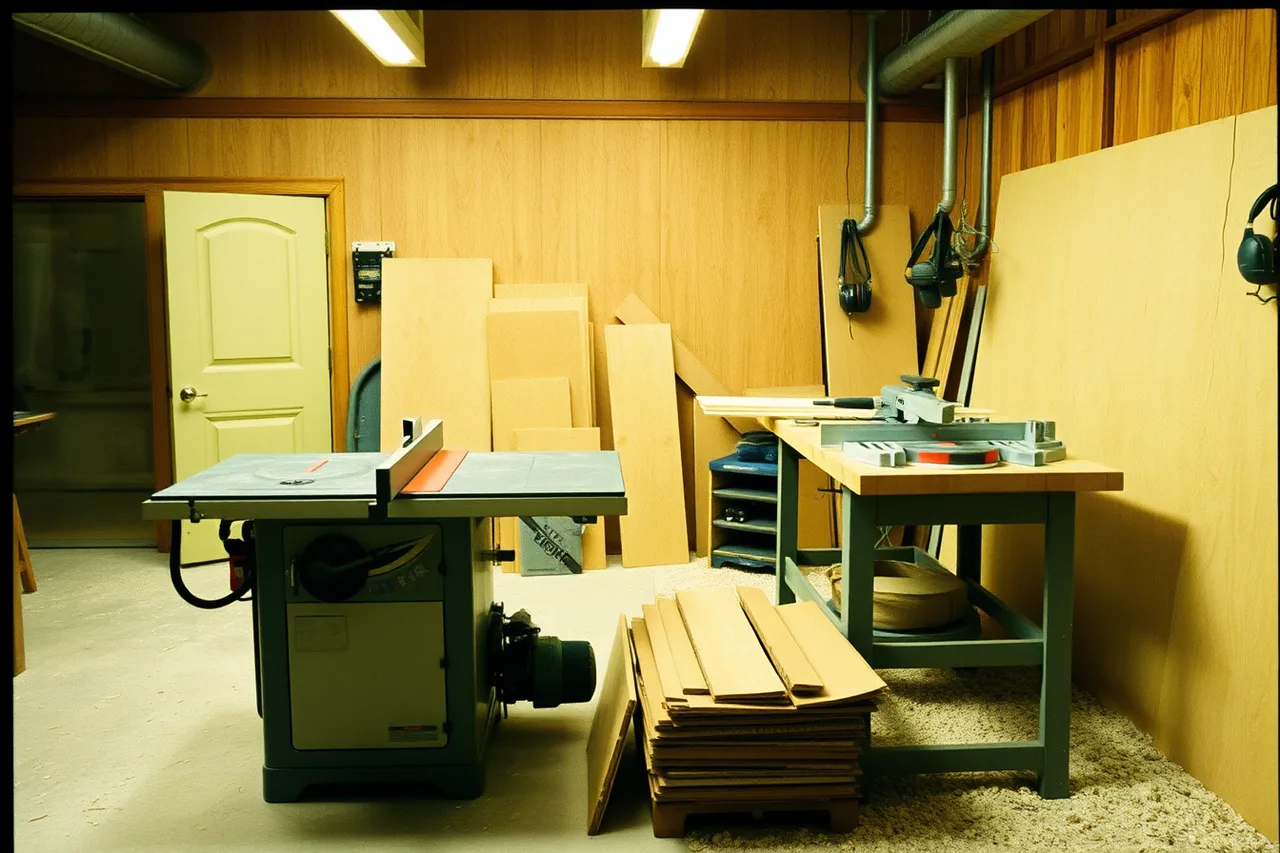
Start with the tool list. A track saw or table saw, a miter saw, a router, a drill and impact driver, a random orbit sander, a jigsaw and a shop vacuum cover most scenic work. Add a paint area with ventilation.
Rockler and Woodcraft sell the woodshop tools. McMaster-Carr carries fasteners, wheels and hardware. Adafruit and SparkFun supply sensors, microcontrollers and wiring for puzzle builds.
For electronics, you need a soldering station, a multimeter, heat shrink, ferrules and a labeled parts bin. Wire discipline matters later, when a puzzle fails mid-game.
Any wiring you install for props, lighting or effects falls under the electrical safety rules for general industry, covering installation, grounding, guarding and use of equipment. The requirements are set out in 1910.303 - General. | Occupational Safety and Health Administration.
Labor is the real cost. A two-person shop can produce flat scenery quickly and custom mechanisms slowly. Track hours per piece for the first month, then compare that number against supplier quotes.
PPE is not optional. You must assess the workplace for hazards and provide the right protection, including eye, hearing and respiratory protection where the work demands it. The duties are described in 1910.132 - General requirements. | Occupational Safety and Health Administration.
Lockout/tagout is the step most new shops skip. Any machine that can release stored energy during service, such as a saw, dust collector or compressor, needs an energy control program, documented procedures and training.
The obligations are set out in 1910.147 - The control of hazardous energy (lockout/tagout). | Occupational Safety and Health Administration.
Write it down before an inspector or an insurer asks. A one-page energy control procedure with tags, locks and a training log is enough to start, and it takes an afternoon.
A worked example: a themed stone wall
Say you need a 12 foot by 8 foot faux stone wall. A Los Angeles shop quotes $2,400 finished, delivered in five weeks. Building it yourself, materials run about $300: foam board, coating, paint and adhesive.
Your labor is the difference. If the wall takes 30 hours at a $25 hourly rate, that is $750 in labor, plus shop time and cleanup. You save roughly $1,350 and lose five weeks of schedule buffer.
Now change one variable. If your shop is unheated, or you have no dust collection, or nobody has built a faux finish before, the supplier quote starts looking cheap. Time, skill and safety equipment decide the answer.
Import permits and duties when sourcing from abroad
Imported props look cheap on a marketplace listing and expensive at the door. Duties, brokerage, freight and inspection can add a large share to the landed cost.
Landed cost adds to the sticker
- Dutiestariff classification by material
- Brokeragefee per customs entry
- Freightocean weeks plus clearance
- Inspectionunlisted electrical equipment risk
Some goods need a license or permit before they can enter the country, and the requirements depend on what you are importing. Federal guidance on how to obtain one is at How to get an import license or permit | USAGov.
Know the tariff classification before you order. A foam prop, a powered electronic puzzle and a fabric costume can land in different categories with different duty rates.
Customs brokers charge a fee per entry. On a small order, that fee can exceed the duty itself, which is why consolidating shipments matters.
Electrical items made for other markets may not carry US listings, and unlisted equipment creates an inspection problem for your local authority. Ask for certification documents before you pay.
Lead times stretch at ports. Ocean freight from Asia commonly runs several weeks plus customs clearance, and peak season adds more. Air freight is faster and rarely economical for bulky set pieces.
For most first venues, importing only makes sense for small hardware: locks, sensors, LED modules and specialty fittings. Build or buy the bulky scenic work domestically.
Deciding what to buy, what to build and what to rent
Sort every element into one of three buckets, then defend the choice with numbers. The buckets rarely overlap once you write down lead time, cost and failure risk.
Deciding what to buy, build, rent
- Buy anything with a mechanism, a warranty or a certification. Locks, controllers, sensors and powered effects fall here, because a failure costs you a booked slot.
- Build anything flat, large or theme-specific. Scenery, plinths, signage frames and dressing are cheaper in your shop and easier to repair.
- Rent anything you need for a season, a photo moment or a temporary theme. Rental keeps capital free and lets you test an idea before committing.
- Source consumables locally. Paint, adhesive, fasteners and fabric are not worth shipping, and local pickup keeps your build moving.
- Re-check the split after your first month of operation. Real wear patterns tell you what to stock as spares.
Use a checklist to keep the build honest before you sign purchase orders.
Pre-purchase build checklist
- Element assigned buy, build or rent with reason
- Supplier quotes include ship dates and spares
- Shop tools, PPE and lockout/tagout ready
- Electrical work documented and inspected
- Spare locks, sensors and controllers stocked
- Freight, duty and brokerage in landed cost
- Build calendar aligned to target opening
Money is the constraint that decides most of these calls. If you are still mapping the whole budget, including lease, buildout and working capital, our breakdown of startup costs and funding shows where owners typically overspend.
A sensible first build often lands near a 60/30/10 split: about 60 percent bought, 30 percent built in-house, 10 percent rented. Adjust it to your skills, not to a target.
Whichever path you choose, document it. Drawings, quotes, inspection records and training logs protect you when a prop fails, an inspector visits or an insurer asks how the room was built. If you are planning a full venue fit-out rather than a single room, our guide to kitting out a new escape room covers the wider equipment picture.