Guides
Escape room fire code Ontario: what the Fire Code requires
Escape room fire code in Ontario: the Fire Code, O. Reg. 213/07, sets fire safety plan, exit and posted load duties, with BC and Alberta enforcement in brief.
What to take away
- Ontario enforces the Fire Code, O. Reg. 213/07 under the Fire Protection and Prevention Act, 1997, through the Fire Marshal and local fire departments.
- The Ontario Fire Code requires a fire safety plan that is approved, kept in the building and reviewed at least every 12 months.
- Exits and the access to them must stay clear of counters, railings and barriers, and a load above 60 persons must be posted.
- British Columbia enforces the BC Fire Code under the Fire Services Act, and Alberta the Alberta Fire Code through the Safety Codes Act.
- A blocked exit or a disabled alarm can close a room the same day in any of the three provinces.
Codes, enforcers and inspection triggers
Canada has no national fire code in force. Each province adopts the National Fire Code of Canada, amends it, and appoints its own enforcement. This guide works through the escape room fire code in Ontario in detail and summarises the other two provinces.
| Province | Code in force | Enforcing authority | Fire safety plan | Inspection trigger |
|---|---|---|---|---|
| Ontario | Fire Code, O. Reg. 213/07 | Office of the Fire Marshal and municipal fire department | Fire chief approval, yearly review | Pre-opening inspection, complaint, yearly visit |
| British Columbia | BC Fire Code | Office of the Fire Commissioner and local fire department | Required for assembly occupancy, on site | Pre-opening inspection, complaint |
| Alberta | Alberta Fire Code | Fire Commissioner and accredited municipalities or agencies | Required, on site | Permit inspection, complaint |
Fire code by province
Ontario
- Primary regulation
- O. Reg. 332/12
- Enforcement body
- Fire Marshal + local fire dept
- Occupant load sign
- Required
- Fire safety plan
- Approved by local fire chief
British Columbia
- Primary regulation
- BC Fire Code
- Enforcement body
- Fire Commissioner + local fire chief
- Occupant load sign
- Required
- Fire safety plan
- Required, enforced locally
Alberta
- Primary regulation
- Alberta Fire Code
- Enforcement body
- Fire Commissioner + accredited municipalities
- Occupant load sign
- Required
- Fire safety plan
- Reviewed by fire inspector
Two Ontario regulations matter, and their numbers are easy to mix up. The Fire Code, which governs how an operating escape room is run, is O. Reg. 213/07, made under the Fire Protection and Prevention Act, 1997. O. Reg. 332/12 is the earlier Building Code. Ontario's current Building Code is O. Reg. 163/24, which adopts the National Building Code of Canada 2020 with Ontario amendments, while O. Reg. 332/12 continues to apply to construction with a permit issued on or before December 31, 2024. The Building Code governs how the space is built: occupancy, exits and sprinklers at design stage.
None of the three provinces adopts the NFPA 101 Life Safety Code as law. It shapes how designers think about egress, so US-trained contractors quote it, but the binding text is provincial.
Occupancy load and exit count
Load is calculated from floor area, not from puzzle stations. Assembly factors in the National Building Code run from about 0.40 square metres per person for standing space to about 1.20 for tables and chairs (typical range).
- Measure net floor area for each game room and the lobby.
- Apply the assembly factor for the use.
- Compare that number with the maximum players the game holds.
- Ask the fire inspector to confirm the posted number before you print the sign.
- Cap bookings at that number.
The area method is worked through in escape room occupancy load, including what cities do when the calculation exceeds the game capacity.
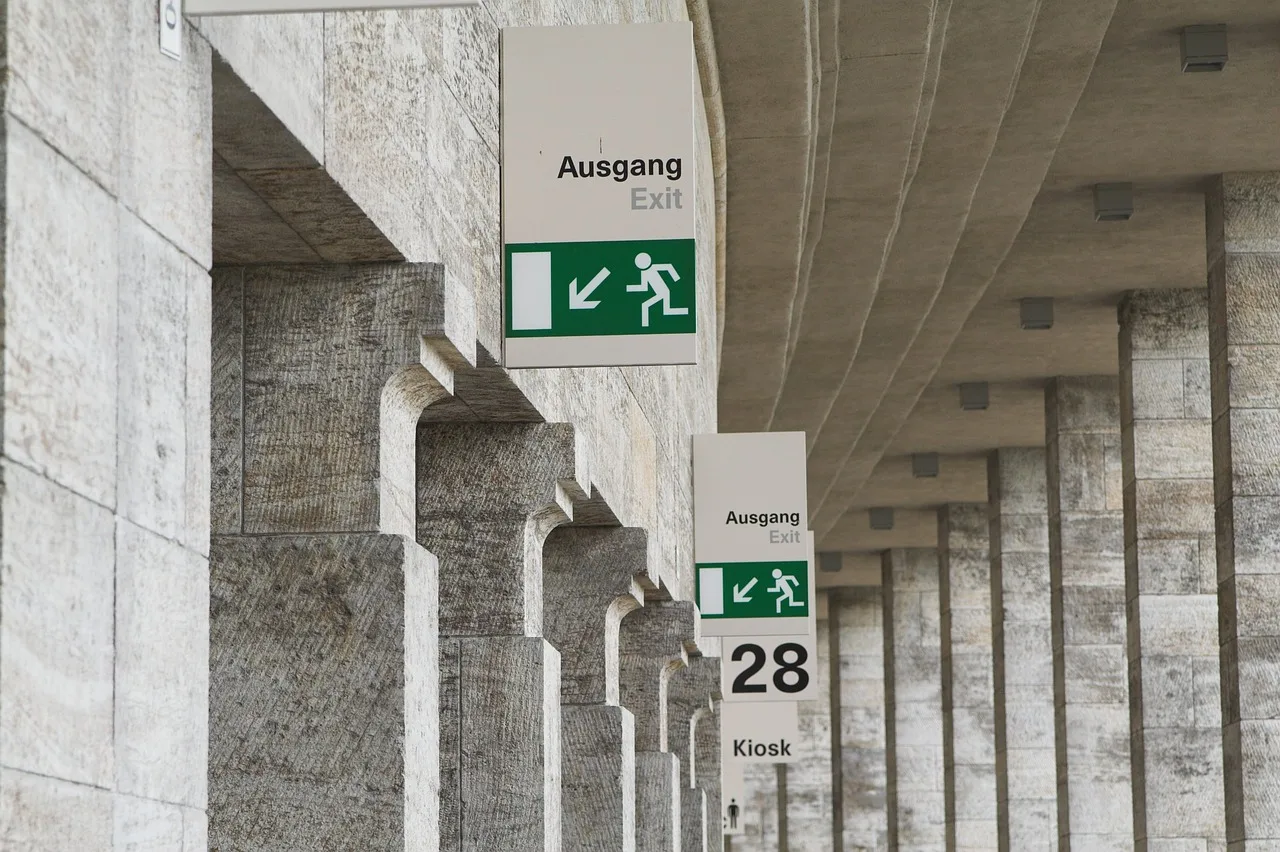
In Ontario, the Fire Code requires the occupant load to be posted in a conspicuous location where it is more than 60 persons. Most Canadian jurisdictions want a second exit once the load passes 60. Below that, one exit is often accepted when travel distance is short and the path stays clear. Egress doors in a game room must open without a key, a code or staff help, and magnetic locks must release on alarm or power failure.
The Ontario Fire Code also says turnstiles, checkout counters, railings or barriers shall not obstruct the exits or access to exits from any room. For an escape room, that covers the lobby counter, queue rails and any set piece placed in front of a door.
Fire safety plan, alarms and emergency lighting
The plan is the first document an inspector asks for. Under the Ontario Fire Code the fire safety plan must be prepared, approved and implemented, kept in the building in an approved location, and reviewed at intervals not greater than 12 months. BC and Alberta require it on site.
A workable plan names the owner, the building address, key and lock details, staff duties, evacuation routes, the meeting point and the last annual review date.
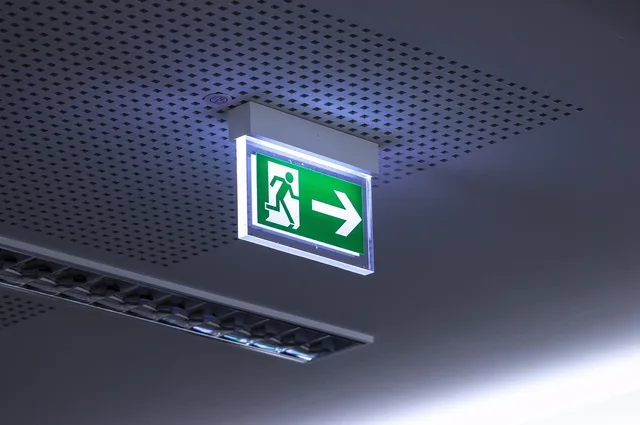
Full alarm systems are required where the building code calls for one, which turns on building size and occupancy. A small low-rise may have none, so staff notification carries the load. Where an alarm system exists, the Ontario Fire Code says that once activated it shall not be manually silenced unless supervisory staff have confirmed, following the procedures in the approved fire safety plan, that no fire emergency exists. Emergency lighting must cover exits and the route to them, and exit signs must stay lit.
Evacuation duties belong in the staff training plan for a new escape room employee. Operators with US rooms use OSHA 1910.38 for emergency action plans.
Sprinklers, renovations and the building you lease
Sprinkler obligations follow building size, height and construction, not the escape room use. A single-storey low-rise with a small assembly space often has none. High-rise and larger assembly buildings usually do. A renovation that changes the occupancy or the exits can force an upgrade.
Two identical escape rooms in one city can carry different sprinkler duties, because the duty belongs to the building.
Ask the fire department or a fire protection engineer before signing a lease, because that answer moves the build-out budget.
Pre-opening compliance checklist by province
- Ontariobuilding permit, approved fire safety plan kept on site, pre-opening inspection, posted load where it is more than 60, review at least every 12 months.
- British Columbiamunicipal permit, plan on site, pre-opening inspection, posted load, yearly review.
- Albertapermit through an accredited agency, plan on site, inspection before occupancy, posted load, yearly review.
- All threedoors that release without a key, tested emergency lighting, lit exit signs, serviced extinguishers.
Set the group cap in your escape room booking software in Canada to match the posted load, so an online booking cannot push a room past its number.
Penalties and closure orders
| Province | Immediate order power | Fine route |
|---|---|---|
| Ontario | Closure order for a blocked exit, disabled alarm or exceeded load | Fire Protection and Prevention Act; a corporation is liable to a fine of not more than $500,000 for a first offence |
| British Columbia | Remedial order from the local fire chief | Fire Services Act and municipal bylaws |
| Alberta | Stop-use order from an accredited municipality or agency | Safety Codes Act |
The order bites first. It can close the room before the next booking, and inspectors come back to confirm the fix. Ignoring an order turns a compliance issue into a prosecution, and the statutes set maximum fines.
In Ontario those maximums are written into the Fire Protection and Prevention Act, 1997. An individual convicted of an offence is liable to a fine of not more than $50,000 for a first offence and not more than $100,000 for a subsequent offence, or to imprisonment for up to one year, or both. A corporation is liable to a fine of not more than $500,000 for a first offence and not more than $1,500,000 for a subsequent one. A director or officer who knows the corporation is violating the fire code faces the same limits as an individual.