Guides
Escape room employee training plan: from shadow to sign-off
An escape room employee training plan in stages: shadow a shift, reset to a photo, give hints, run the clock, drill the release, then sign off.
What to take away
- Train a new employee in stages, and end each stage with a check the trainer can see.
- The first reset is done alone and checked by a second person against the photo before the doors open.
- Hint, clock and emergency release are three more skills, because each fails in its own way.
- Drill the emergency release monthly, and record who has demonstrated it.
- Nobody covers a shift alone until a sign-off exists for the specific rooms and tasks.
- Occupancy, egress and lock-release rules are set locally. Confirm them with your fire marshal and a licensed architect or engineer.
A new employee does not learn the job in one pass. Teach the skills in the order the work happens, and let the trainee advance only when the previous check is passed. The table shows the whole path at a glance.
| Stage | The trainee does | The trainer sees before moving on |
|---|---|---|
| Shadow | Watches a full shift | Can name where a game can go wrong |
| Reset | Resets one room alone | Room matches the photo, reset logged |
| Hint | Gives a nudge on request | Team moves forward, puzzle not solved for them |
| Clock | Starts, pauses and stops the timer | Correct timing, check-in on a quiet room |
| Release | Opens the door in a drill | Done without hesitation, twice |
| Sign-off | Runs named rooms solo | Record updated with rooms and tasks |
Shadow a shift before touching a prop
Start with watching. A trainee who sees a whole shift learns what a room that behaves the same way for every group looks like, and which parts of the job fail separately. Several shadow shifts come before anything else.
During each one, the trainee follows a single game master and writes down what that person does at the start, at the first hint, at the clock and at the reset. Those notes become the questions for stage two.
Stage two: reset alone, checked against the photo
The reset is where sameness is made. A game master who resets props from memory will eventually leave a clue where the last team hid it, and the next group finishes early or never finishes at all.
Give the trainee a reset sheet per room, with a photo of the correct starting state for every puzzle, prop and lock. The trainee resets alone and logs it. A second person checks the room against the photo before the doors open.
Stage three: hints that move a team forward
A hint is a nudge, not a solution. The trainee gives one that moves the team forward without solving the puzzle for them, by whatever channel the room uses.
Practice with a trainer playing the stuck team. The game master scripts give the wording to rehearse, and the trainer watches for hints that hand over the answer too early.
Stage four: clock and flow
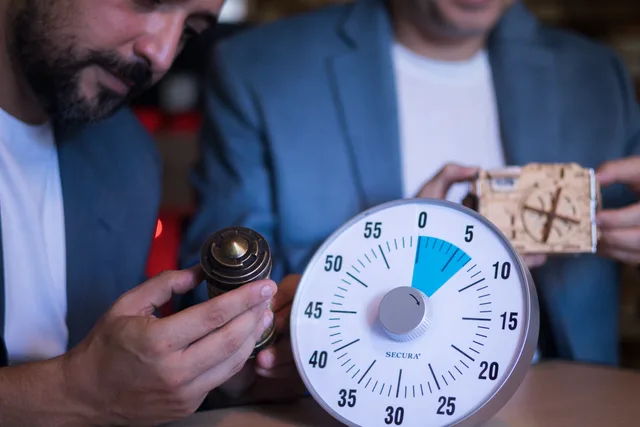
Teach the clock as its own skill. The trainee starts, pauses and stops the timer correctly, and learns when to check in on a quiet room instead of waiting for a request.
Run it with a trainer observing a real group at first. A wrong timer start changes what a paying team experiences, so correct it on the spot and note it on the record.
Stage five: the emergency release drill
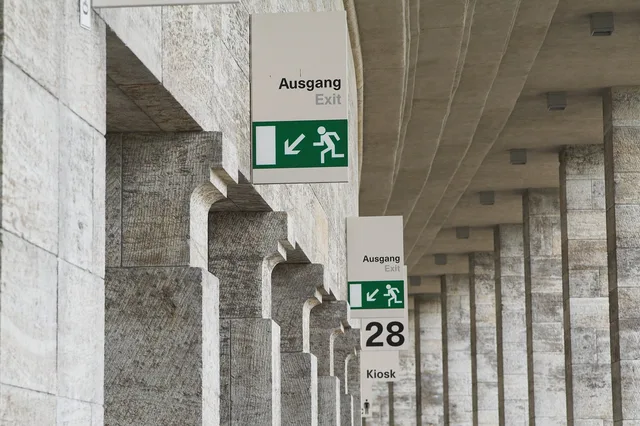
The emergency release is the skill to drill monthly. The trainee opens the door for a distressed player, a medical event or a fire alarm, every time, without hesitation.
Rehearse the release with the room occupied and the lights down, and record who has demonstrated it.
Occupancy, egress and lock-release requirements are set locally. Confirm them with your local fire marshal and a licensed architect or engineer before you write the drill.
Sign off room by room
Keep one current record of who may do what: run a room solo, handle cash, approve a refund, reset a lock, drive for the business or work with minors. Update it when someone is trained, and remove the name when they are not.
A new hire shadows, then works observed, then signs off on the specific rooms and tasks they are cleared for. Nobody covers a shift alone until that sign-off exists, so schedule from the sign-off record rather than from who is free.
Keep each trainee's shift records with the rest of the payroll file. The Department of Labor's small business guidance says employers must keep time and payroll records for their employees.
Waivers and claims in the first week
Waiver handling is a separate drill. Teach the trainee which form the venue uses, who may sign it, how you store it and how long you keep it. Requirements vary by state, so confirm the form and the retention period with a qualified attorney and your insurance coverage.
Your waiver and your marketing are both promises. If the listing says "our hardest room" or "you will need two hours," a customer can rely on that, and the FTC's advertising guide for small business says advertisers must have proof to support their claims. A new employee should repeat only the claims the venue can back up.
For the wider picture of the role, see hiring and training game masters. Recruiting and interviews are covered in hiring reliable escape room staff.
Common questions
How long should training take before someone runs a room alone?
Long enough to reset every room to its photographed state without help and to demonstrate the emergency release twice. Most venues stage this over several shadow shifts, then add rooms one at a time.
Who checks a trainee's first reset?
A second person, against the photograph, before the doors open.
What should we do when the written process and the real shift disagree?
Fix the document, not the habit, unless the habit is unsafe. Give the written standard an effective date, name an owner, and keep superseded copies out of the staff room.