Guides
Escape room puzzle costs: DIY vs off-the-shelf vs custom
Escape room puzzle cost ranges from $40 DIY to $3,500 custom. Compare freight, state sales tax and owner labor before choosing DIY, off-the-shelf or custom.
What to take away
- Puzzle unit cost ranges from about $40 for a simple DIY prop to $3,500 for a fully custom electronic set piece, before freight and state sales tax.
- Off-the-shelf puzzles from US suppliers usually land between $120 and $450, with domestic shipping adding $15 to $60 per order in 2025.
- DIY wins on cash outlay, custom wins on uniqueness, and off-the-shelf wins on lead time and replacement speed.
- All three paths share one hidden costreset and maintenance labour, which no supplier removes from the owner.
The three sourcing paths differ in unit cost, lead time, repeatability and owner labour.
The three sourcing paths
DIY means building from scratch: a hasp, a magnetic reed switch, a modified lock, or a printed clue. Cheap escape room puzzle ideas often start as $20 to $60 in parts from home improvement stores. The real cost is time. A single custom Arduino puzzle can eat 8 to 20 hours of owner or staff labour. Off-the-shelf means buying finished puzzles from US sellers. These suppliers usually ship from warehouses in states such as Ohio, Texas or California, so freight is domestic and predictable. For a broader supplier list and in-house build decisions, read Sourcing props and set pieces from US suppliers or building in-house. Custom means hiring a prop shop or puzzle fabricator to design and build a one-off piece. That path starts around $500 for a simple custom lock box and rises quickly past $3,000 for an electronic puzzle with sensors and a controller.
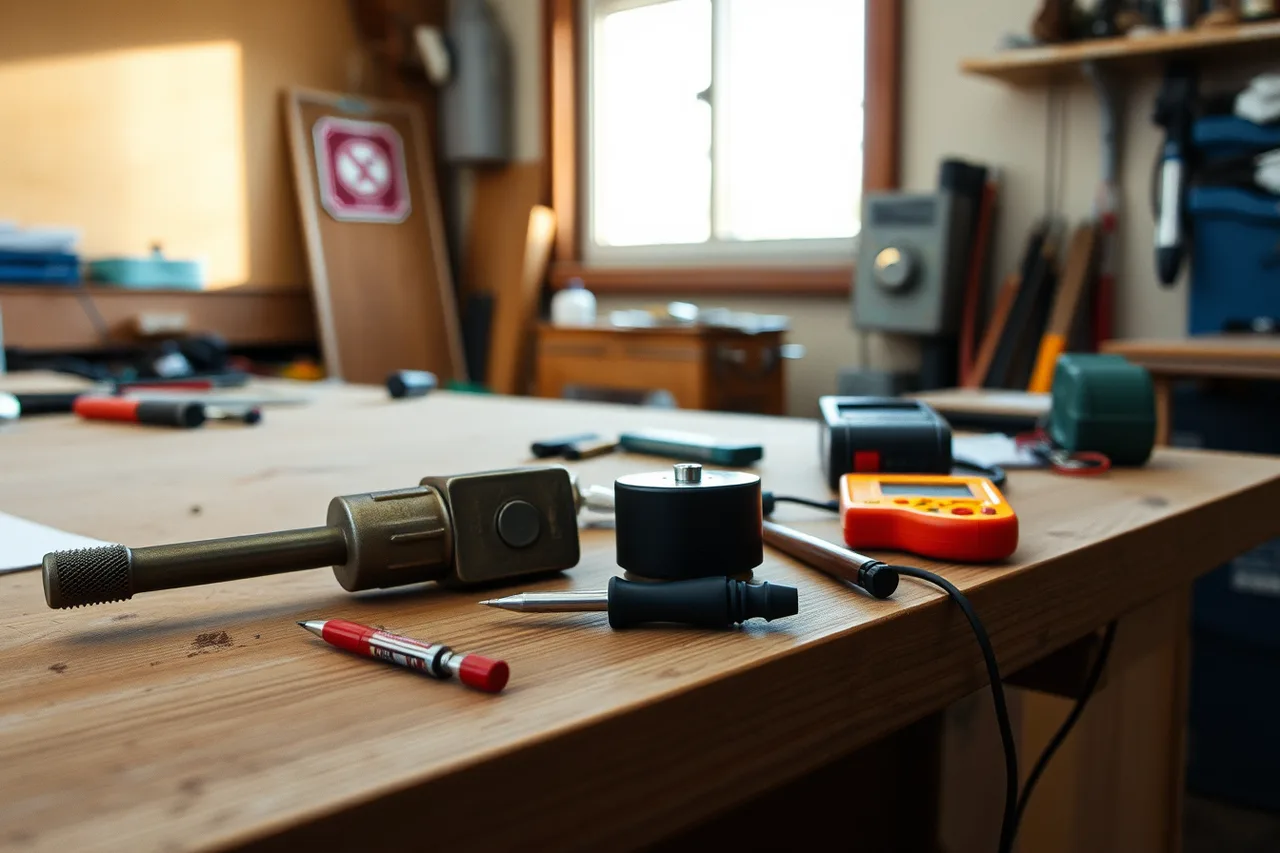
Custom electronic work must meet local electrical and fire safety requirements. NFPA 101 Life Safety Code is the model code most often referenced by US fire officials for escape room occupancies.
Criteria that affect total cost
Puzzle spend sits inside a larger build-out budget. A $450 off-the-shelf puzzle in a 9% tax state adds $40.50 before shipping. Freight is a smaller line item, but it still changes the build-versus-buy math. Domestic orders from US suppliers usually run $15 to $60 per shipment. Freight for a heavy custom piece can exceed $200. State sales tax of 0% to 10% applies to the delivered price in most states, so a $1,200 custom puzzle can add another $120 in tax.
Cost factors by sourcing path
DIY
- Unit cost
- $40–$150 parts
- Freight & tax
- $0–$40 local
- Lead time
- 1–3 weekends
- Owner labour
- 8–20 hours
- Repeatability
- Shop-dependent
Off-the-shelf
- Unit cost
- $120–$450
- Freight & tax
- $15–$60 ship; 0–10% tax
- Lead time
- 3–10 days
- Owner labour
- 1–3 hours
- Repeatability
- Good
Custom
- Unit cost
- $500–$3,500
- Freight & tax
- Quoted; tax applies
- Lead time
- 4–12 weeks
- Owner labour
- 2–6 hours
- Repeatability
- Unique
DIY
- Unit cost per puzzle (2025 illustrative)
- $40 to $150 in parts
- Freight and tax
- $0 to $40 local parts; no freight
- Lead time
- 1 to 3 weekends
- Owner labour
- 8 to 20 hours per electronic puzzle
- Repeatability
- Depends on shop skills
Off-the-shelf
- Unit cost per puzzle (2025 illustrative)
- $120 to $450 per puzzle
- Freight and tax
- $15 to $60 domestic shipping; state sales tax 0% to 10%
- Lead time
- 3 to 10 business days
- Owner labour
- 1 to 3 hours to install and test
- Repeatability
- Good across identical units
Custom
- Unit cost per puzzle (2025 illustrative)
- $500 to $3,500 per piece
- Freight and tax
- Freight quoted per piece; state sales tax applies
- Lead time
- 4 to 12 weeks
- Owner labour
- 2 to 6 hours to install, integrate and train
- Repeatability
- Unique, hard to copy
Accessible puzzle mounting also adds cost. The ADA Title III overview explains public accommodation requirements that apply to escape rooms as places of entertainment.
Example: a four-puzzle room budget
A small owner building four puzzles with a mix might spend $150 on one DIY magnetic lock, $300 on two mid-priced off-the-shelf pads, and $1,200 on one custom finale piece. Add $40 freight and 8% sales tax on the purchased items, and the total lands near $1,730. The same room built all custom would run past $4,000. The same room built all DIY might stay under $600 in parts, but it would demand 40 to 60 hours of owner time.
Four-puzzle room budget
- $150DIY magnetic lock
- $300two off-the-shelf pads
- $1,200custom finale piece
- $1,730total with freight and 8% tax
Before ordering that custom finale, check Escape room occupancy load: how to calculate it for your city so the piece does not reduce exit width.
Where each option wins
DIY is the right call when cash is short and the owner has shop skills. The savings come from labour, not from cheaper materials. Off-the-shelf is the right call when a room needs two or three puzzles fast or when a broken unit must be replaced during a busy month.
Which sourcing path fits?
Cash short and owner has shop skills?
DIY
Off-the-shelf or custom
A custom piece is the right call for a signature room where the puzzle itself is the marketing hook. Escape room word of mouth: making it happen on purpose shows how a signature puzzle feeds referrals.
What none of them solve
No sourcing path removes reset and maintenance labour. A DIY puzzle still needs battery changes. An off-the-shelf unit still needs sensor alignment after a rough group. A custom piece still needs firmware updates. Every puzzle lands on the reset an escape room between games checklist, which covers reset tasks and failures. That is the shared limitation: after installation, the owner keeps paying in minutes per game.